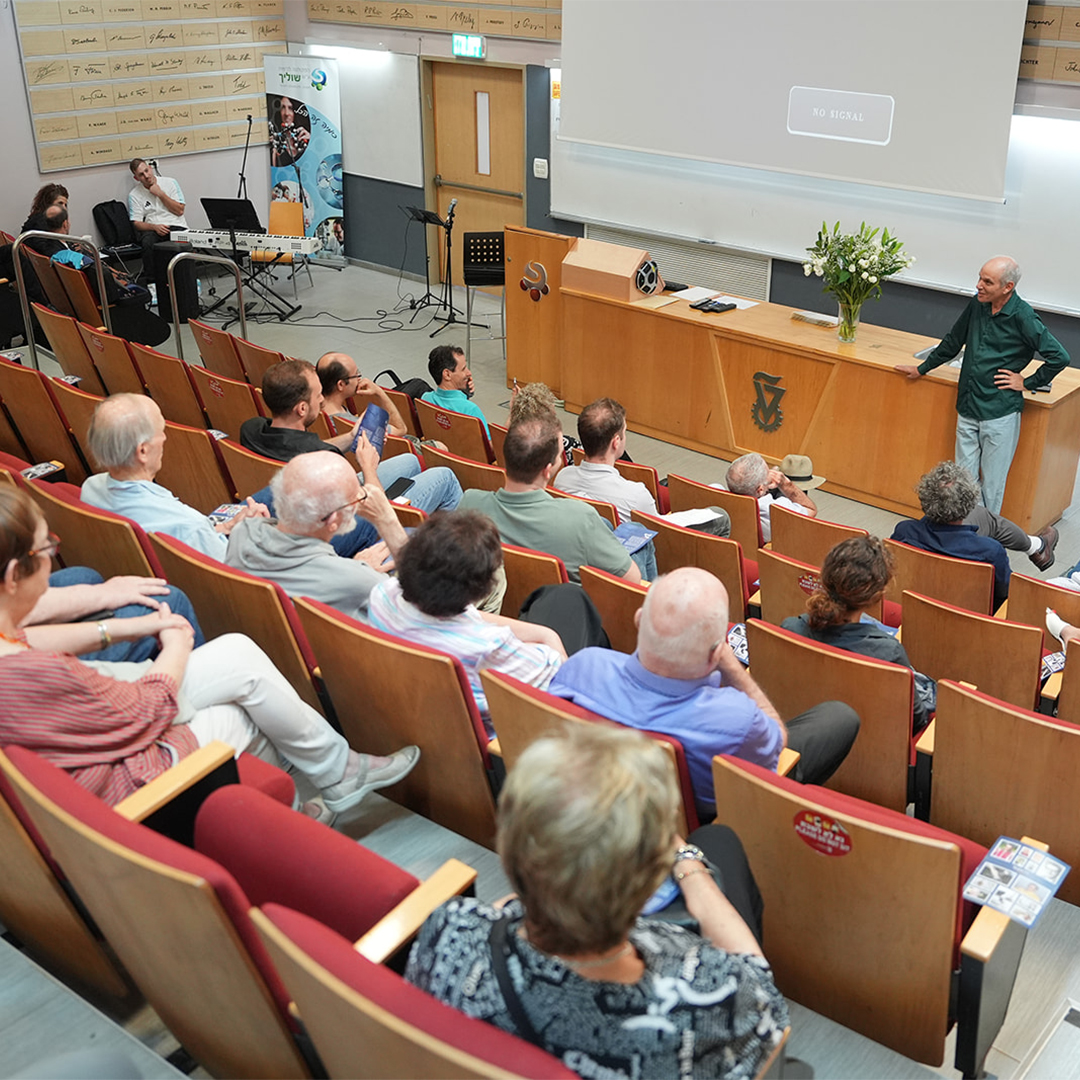
Events of the Institute of Advanced Studies in
THEORETICAL CHEMISTRY
Dr. Yoram Tal Quantum Excellence Award Competition
2026
Presented by The Candidates from The Hellen Diller Quantum Center at The Technion
The Candidates from The Hellen Diller Quantum Center, Technion
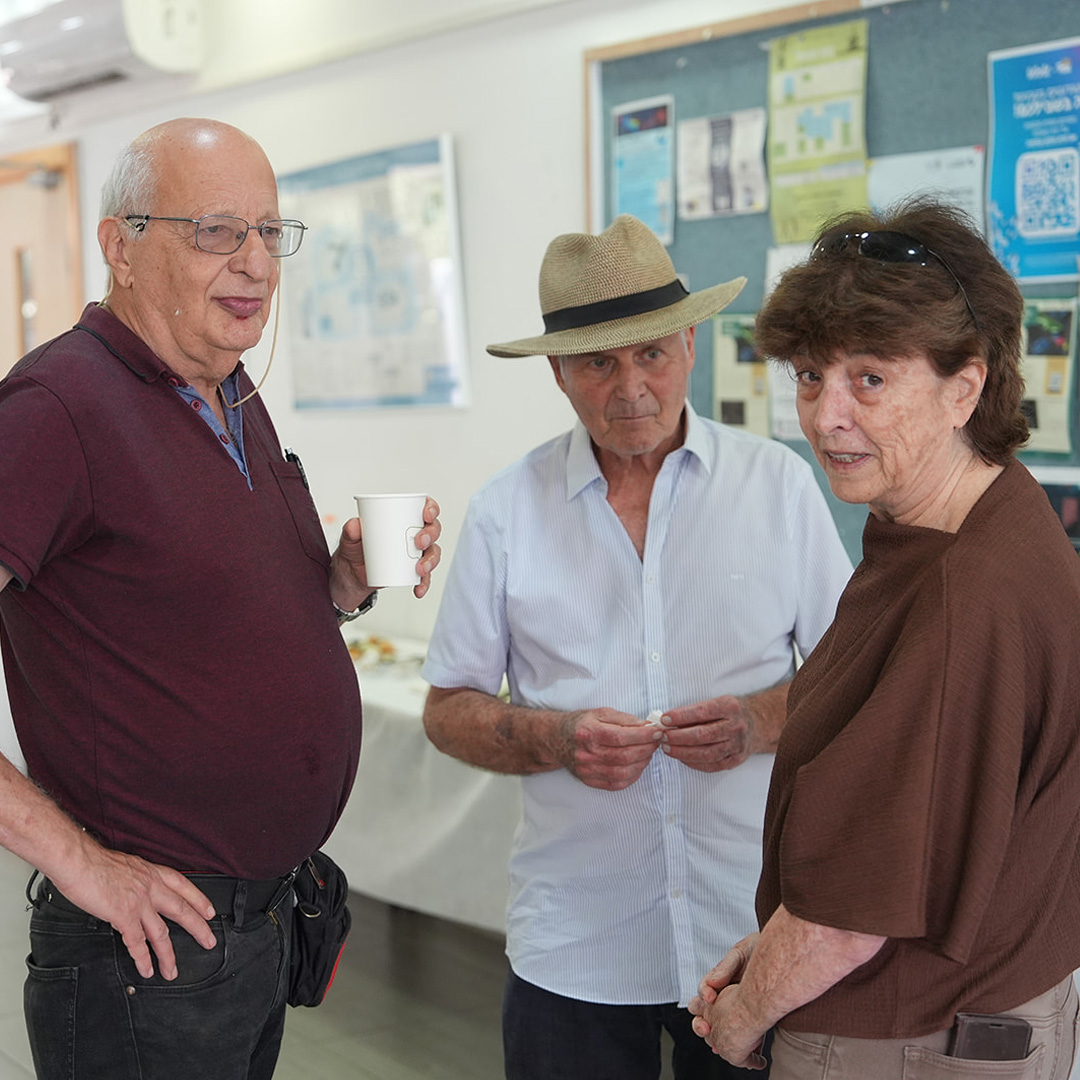
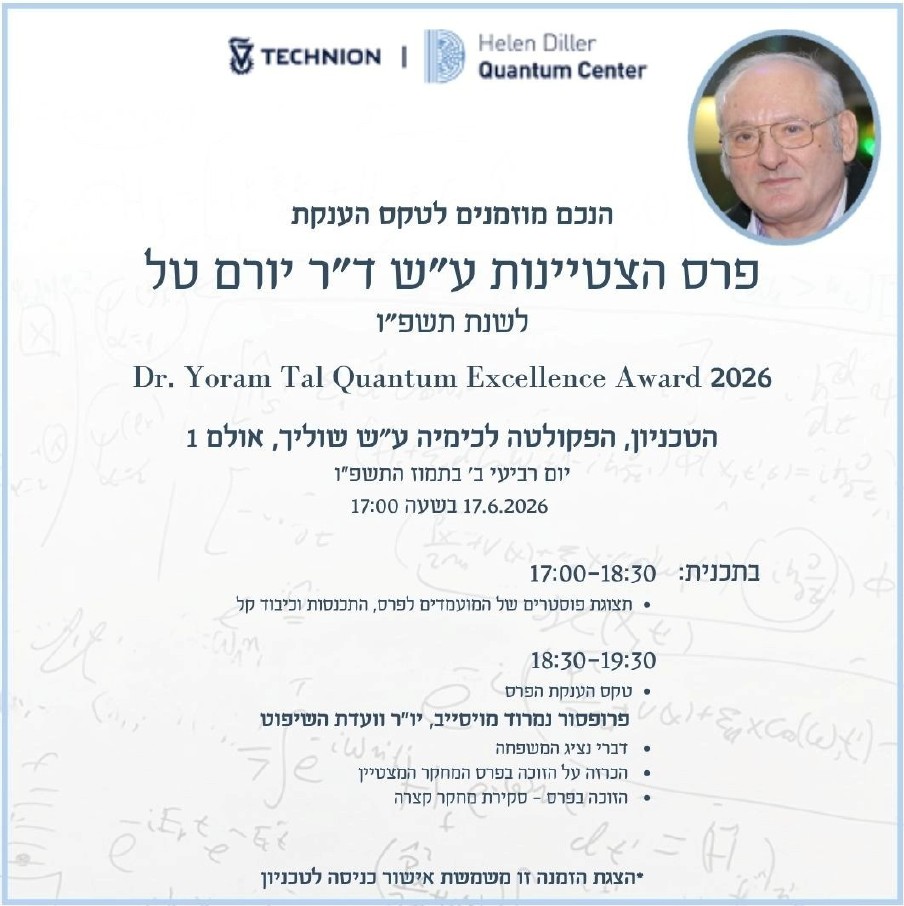
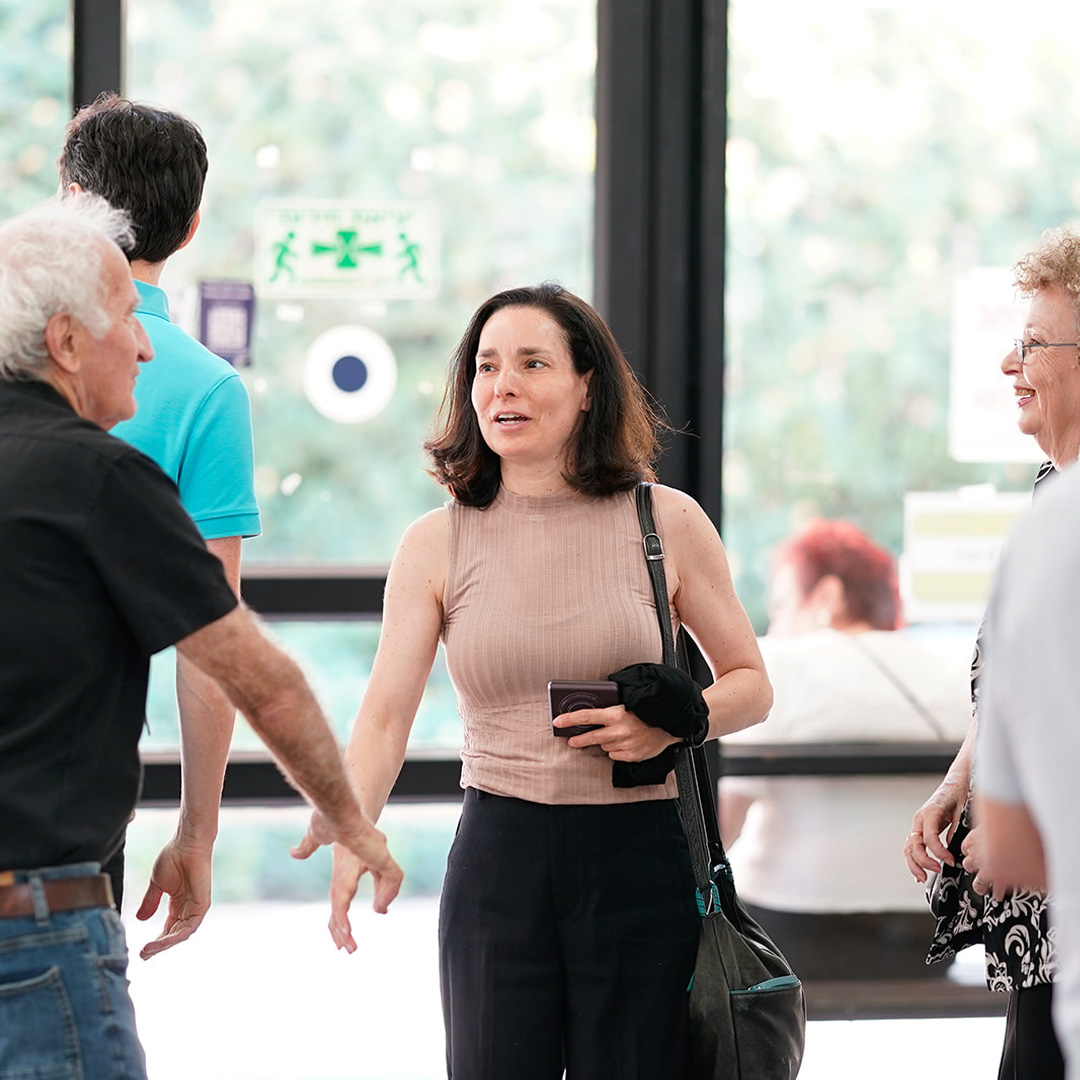
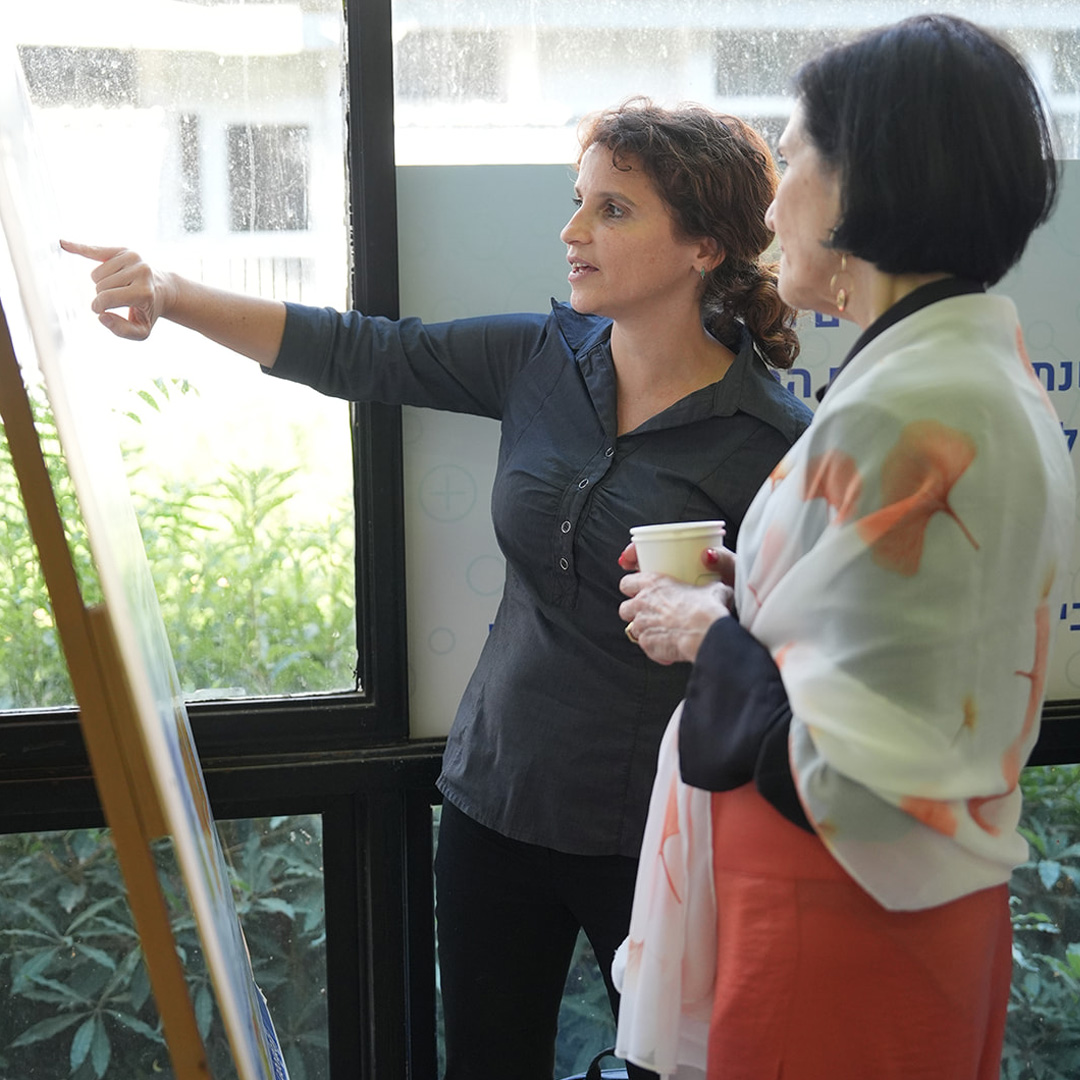
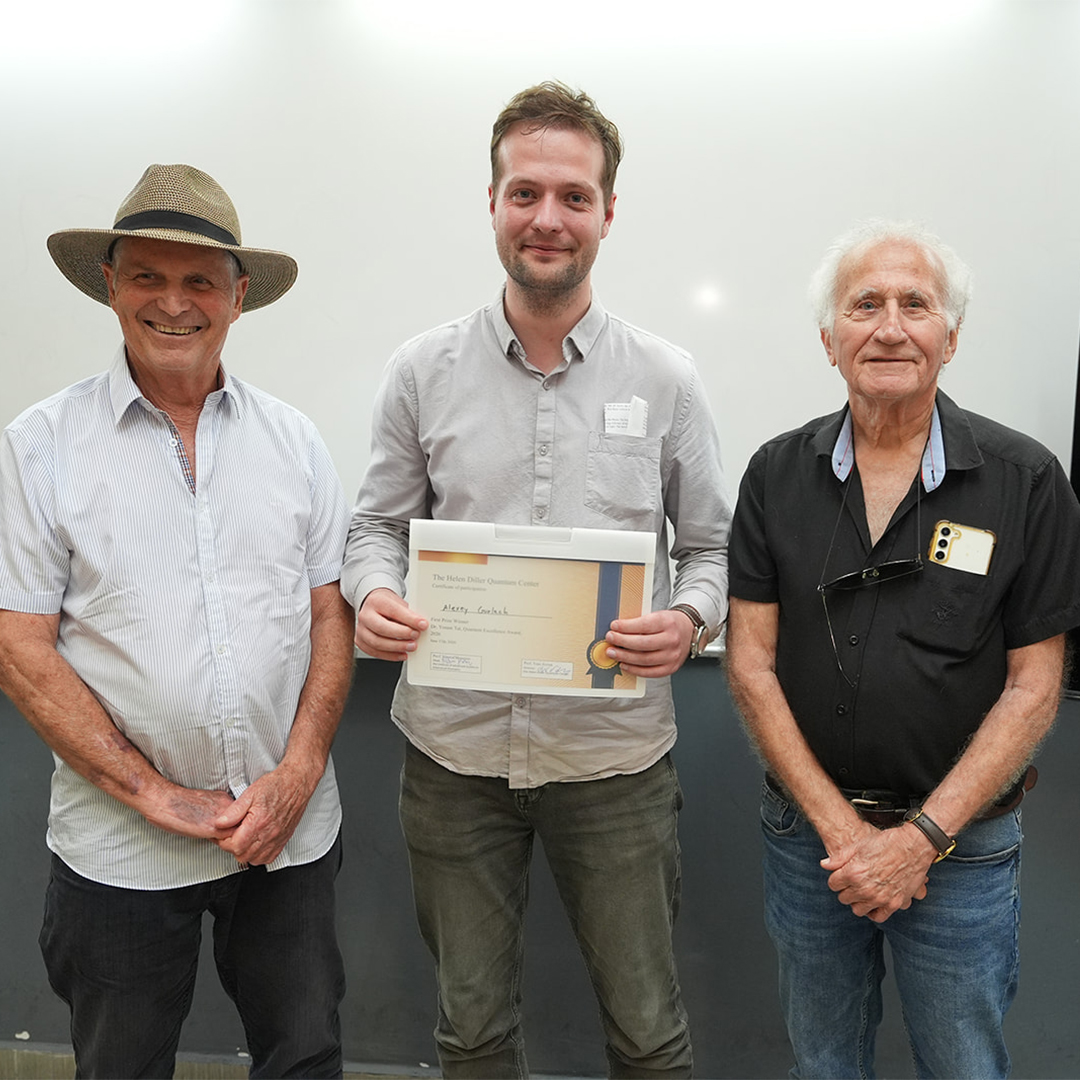
The Winner: Alexey Horlach

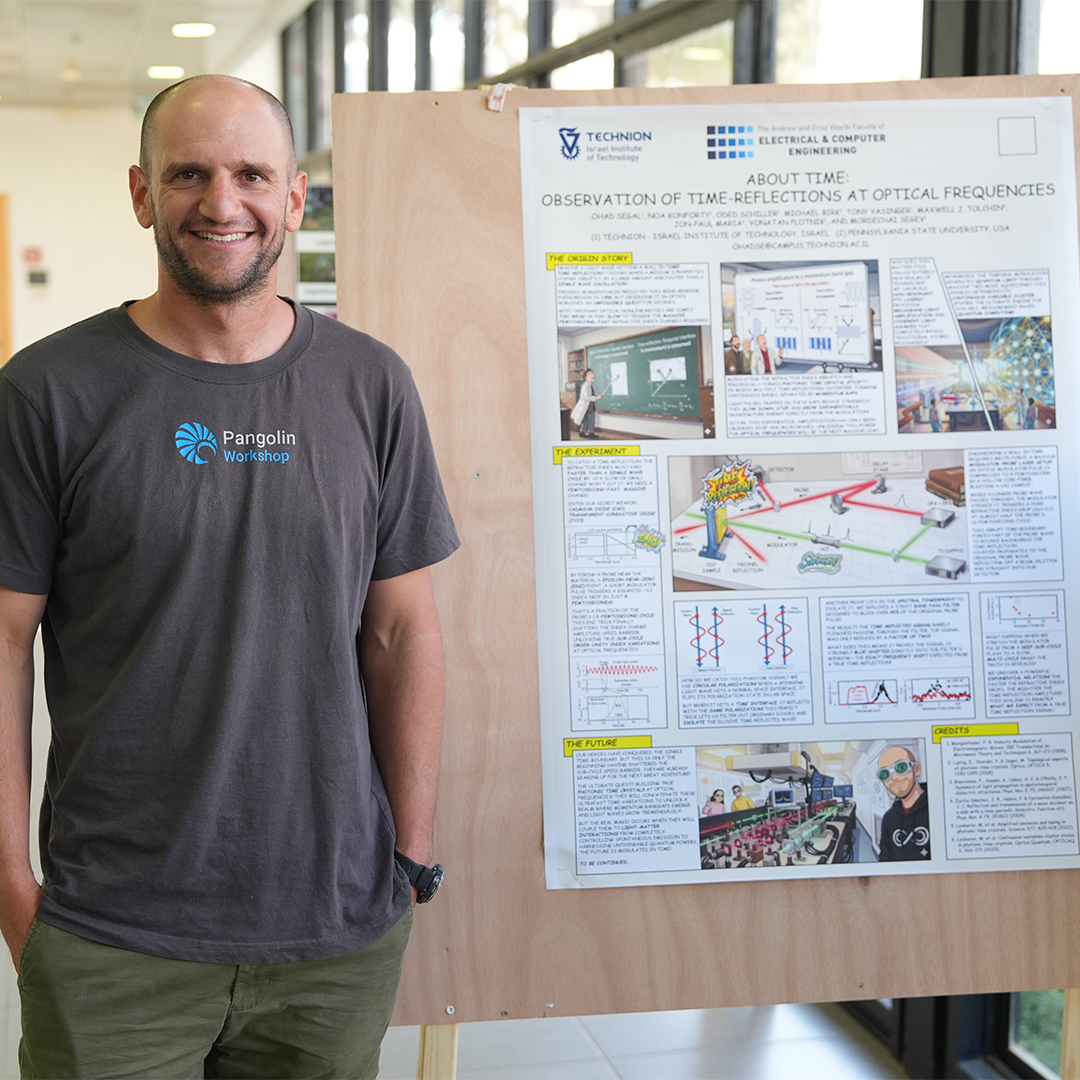
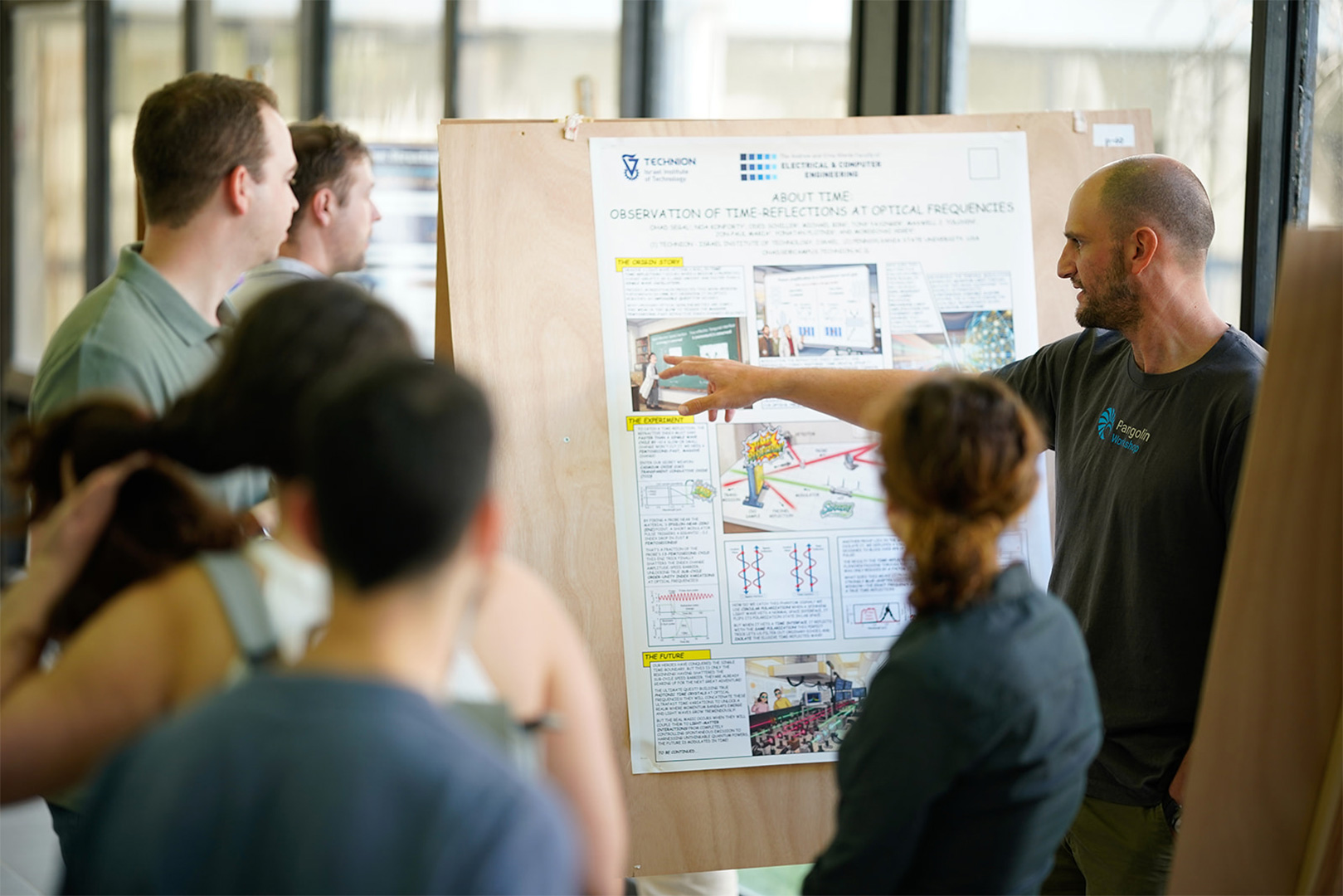
Ohad Segal
PhD Student at the Faculty of Electrical & Computer Engineering at the Technion
The title: About Time: Observation of Time-Reflections at Optical Frequencies
Authors: Ohad Segal†1,2, Noa Konforty†2,3, Oded Schiller1,2, Maxwell J. Tolchin5, Tony Yasniger2,3, Michael Birk2,4, Alexander Palatnik2,3, Soham Saha6, Pavel Sidorenko1,2,
Jon-Paul Maria5, Yonatan Plotnik2,3 and Mordechai Segev*1,2,3
Our research explores fundamental effects of Photonic Time-Crystals (PTCs), which are optical materials whose electromagnetic properties are modified considerably (order unity), rapidly (as fast as a single optical cycle) and repeatedly over time. Unlike ordinary materials, where light reflects from interfaces, PTCs affect light through changes in time. When the refractive index changes abruptly in time, light is “time-refracted” and “time-reflected.” This resembles what happens at boundaries like air-glass interfaces, but it is fundamentally different: instead of conserving energy, this process conserves momentum, and generates time-reflections: waves moving backward in space with conjugated phase – like a video playing in rewind. As it turns out, time-reflections are the key for many exciting phenomena having to do with waves in time-varying media, ranging from time-interfaces and PTCs to novel quantum phenomena. However, while extensively sought-after, observing time-reflections at optical frequencies has remained a major challenge because conventional materials cannot change their refractive index both strongly (order-of-unity) and fast enough (faster than a single wave oscillation). In the past few months, we were able to overcome this bottleneck by utilizing transparent conductive oxides (TCOs), specifically doped Cadmium Oxide (CdO), near its epsilon-near-zero (ENZ) point. By applying an intense, ultra-short laser pulse, we generate a massive, sub-cycle refractive index change (Δn≈−0.3) within just 8 femtoseconds, which is faster than a single 13-femtosecond cycle of our optical probe wave. This temporal boundary enabled the first experimental observation of optical time-reflections.
This breakthrough provides an experimental gateway to PTCs in the optical regime, paving the way for next-generation applications such as non-resonant light amplification, tunable terahertz laser sources for medical imaging, and the deterministic generation of continuous-variable quantum cluster states for scalable quantum computing.
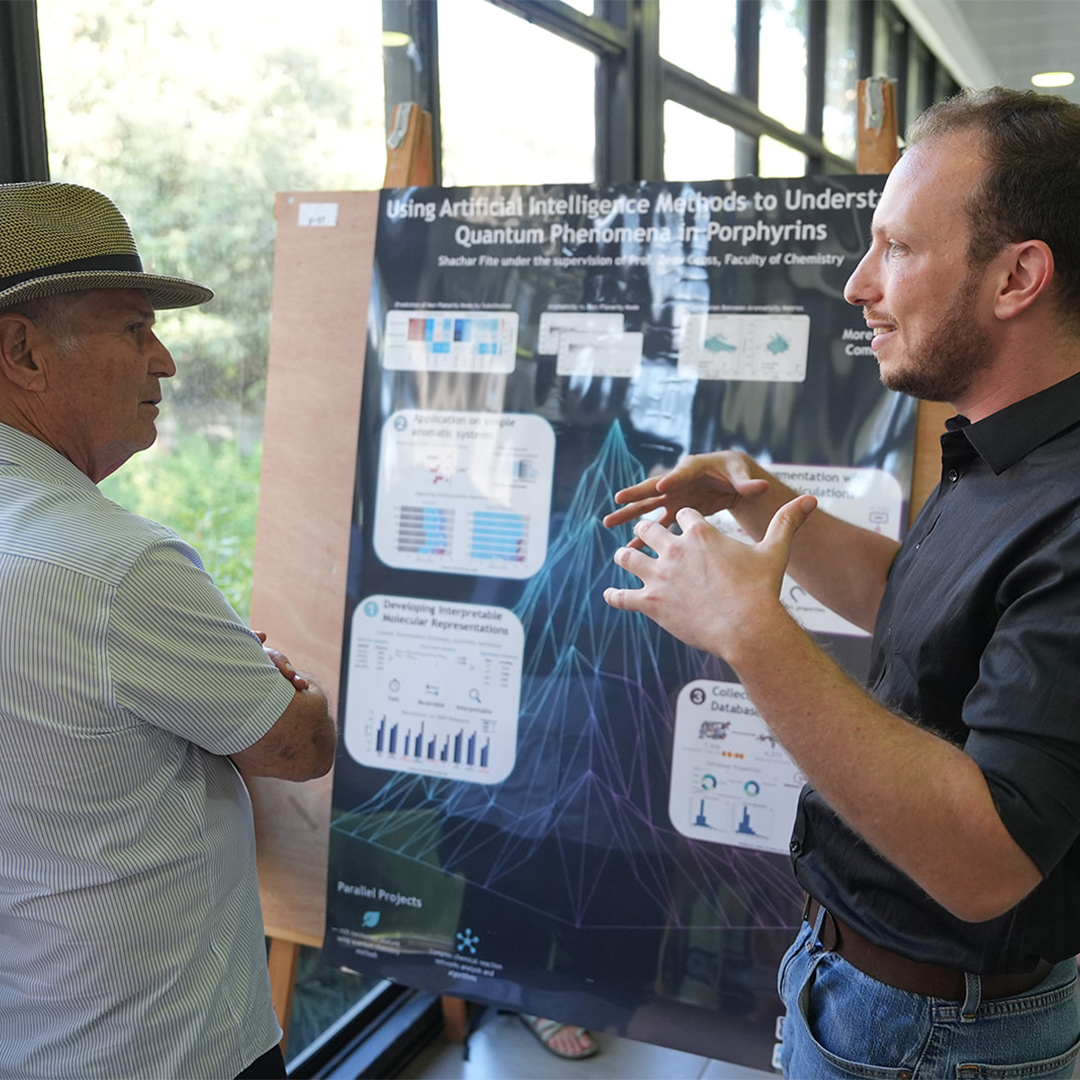
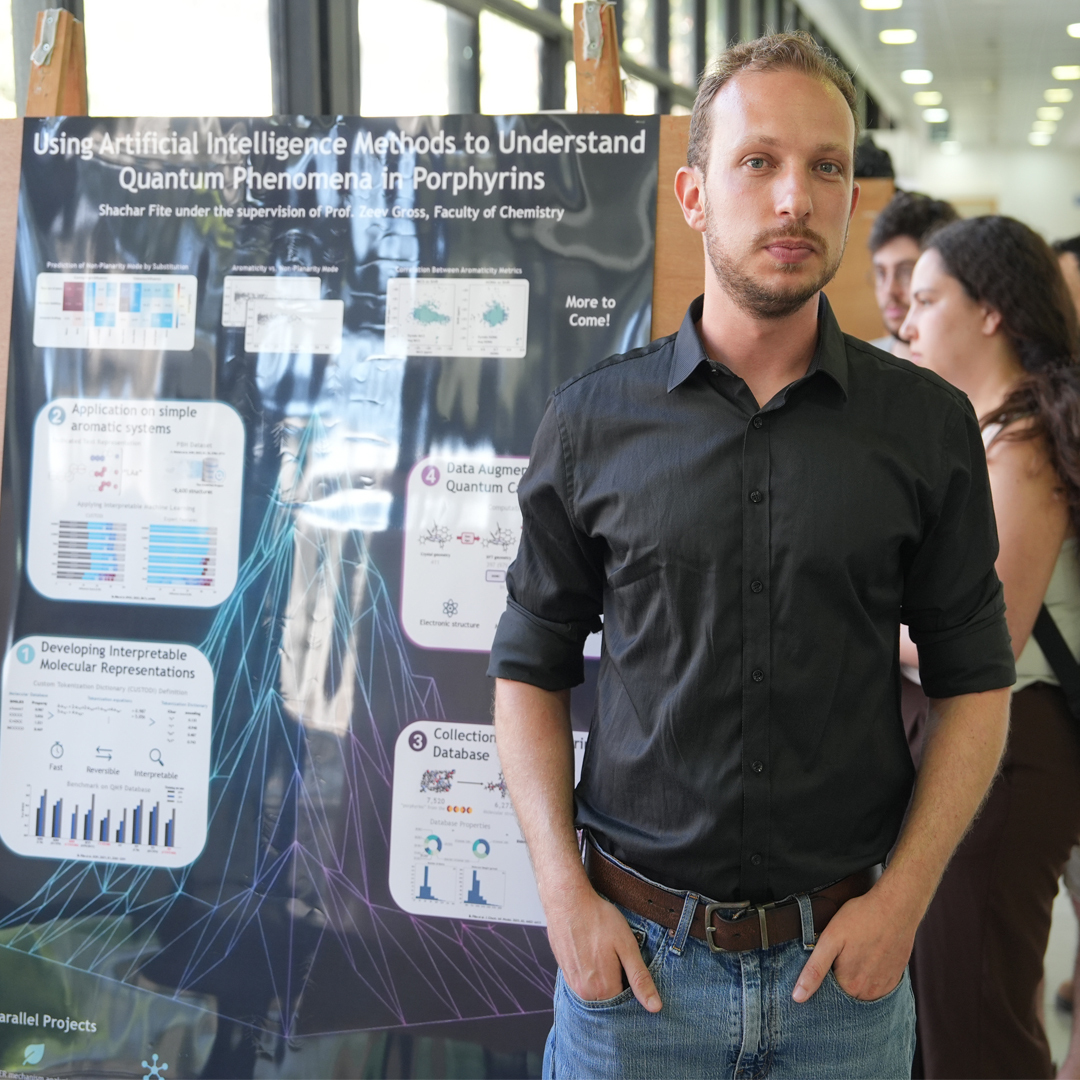
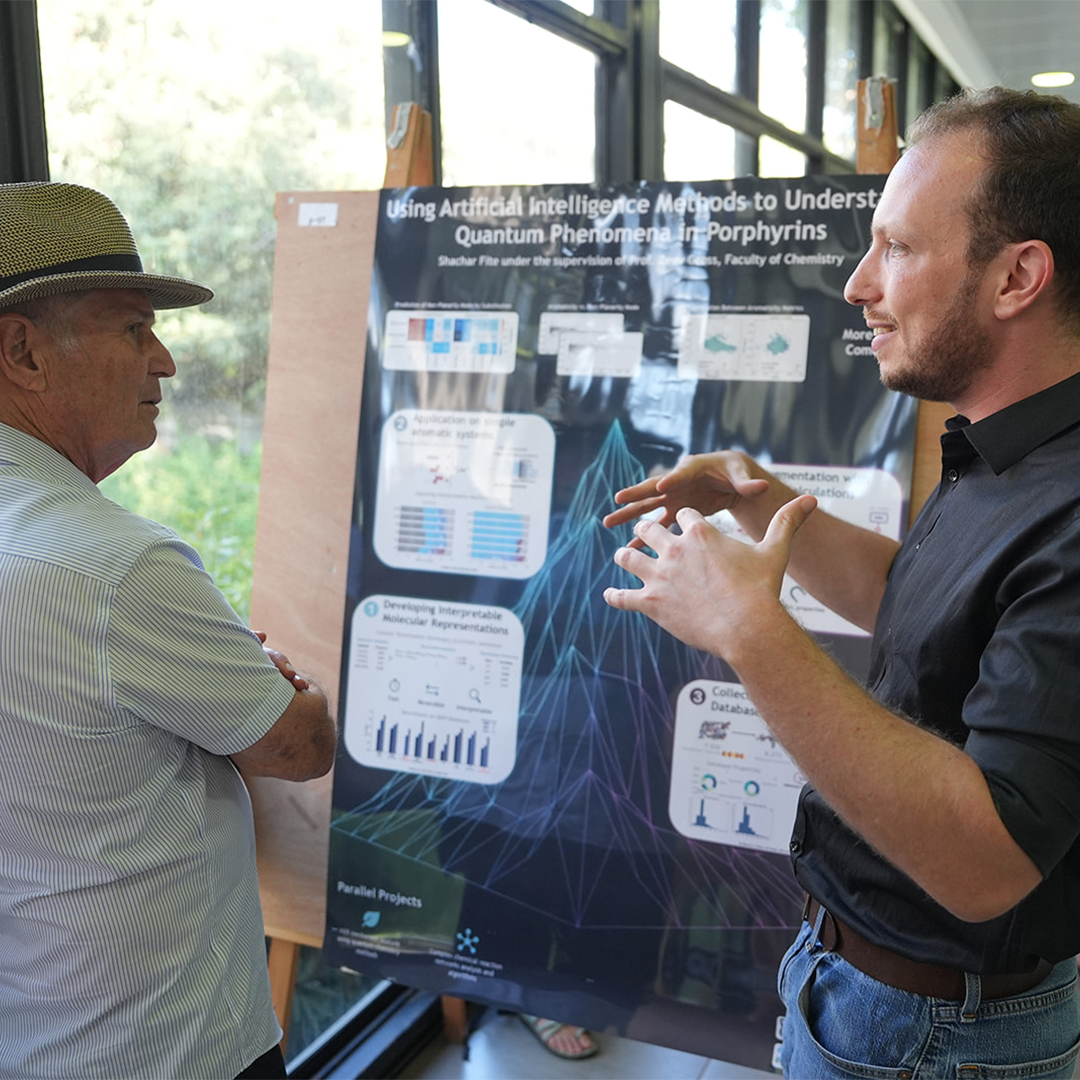
Shachar Fite
PhD Student at the Schulich Faculty of Chemistry at the Technion
The title: Using Artificial Intelligence Methods to Understand Quantum Phenomena in Porphyrins
Authors: Dr. Shachar Fite, Prof. Zeev Gross
The research combines quantum chemistry, chemical physics, and machine learning to uncover structure–property relationships in complex molecular systems.
The main focus is porphyrins and related macrocycles, where multiple delocalization pathways, non-planarity, and metal–ligand interactions make aromaticity difficult to define and quantify consistently.
A large, systematically computed quantum-chemical database of porphyrins was developed and analyzed using statistical and interpretable machine-learning methods to relate molecular structure to aromaticity, magnetic response, electronic structure, and geometry.
This work builds on earlier studies of data-driven molecular representations and interpretable machine learning for polyaromatic hydrocarbons, as well as quantum-chemical investigations of hydrogen-evolution catalysis and chemical reaction networks. Together, these studies establish computational and data-driven approaches for extracting new, interpretable insights into complex many-electron quantum systems.
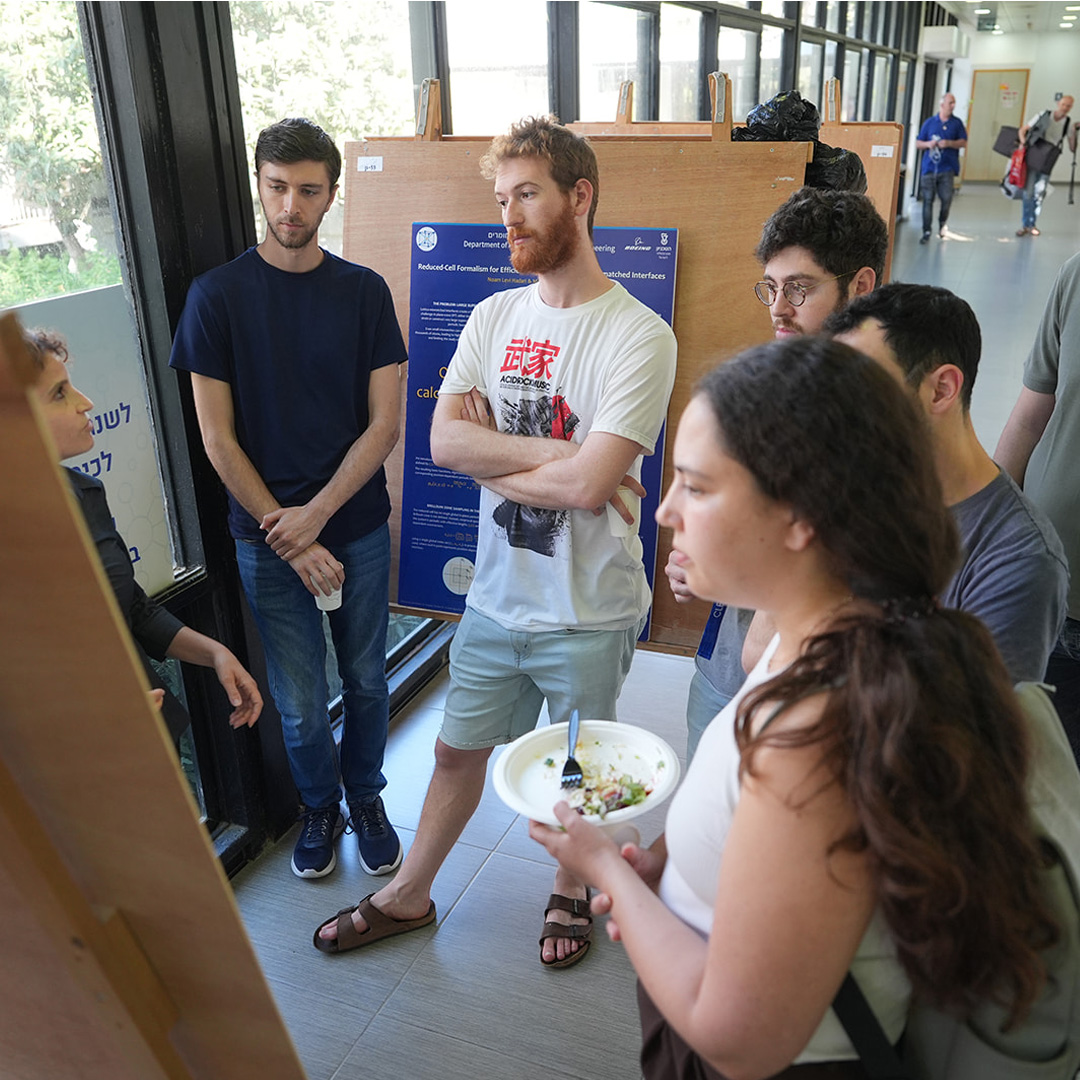
Noam Levi-Hadari
PhD Student at the Faculty of Materials Science and Engineering at the Technion
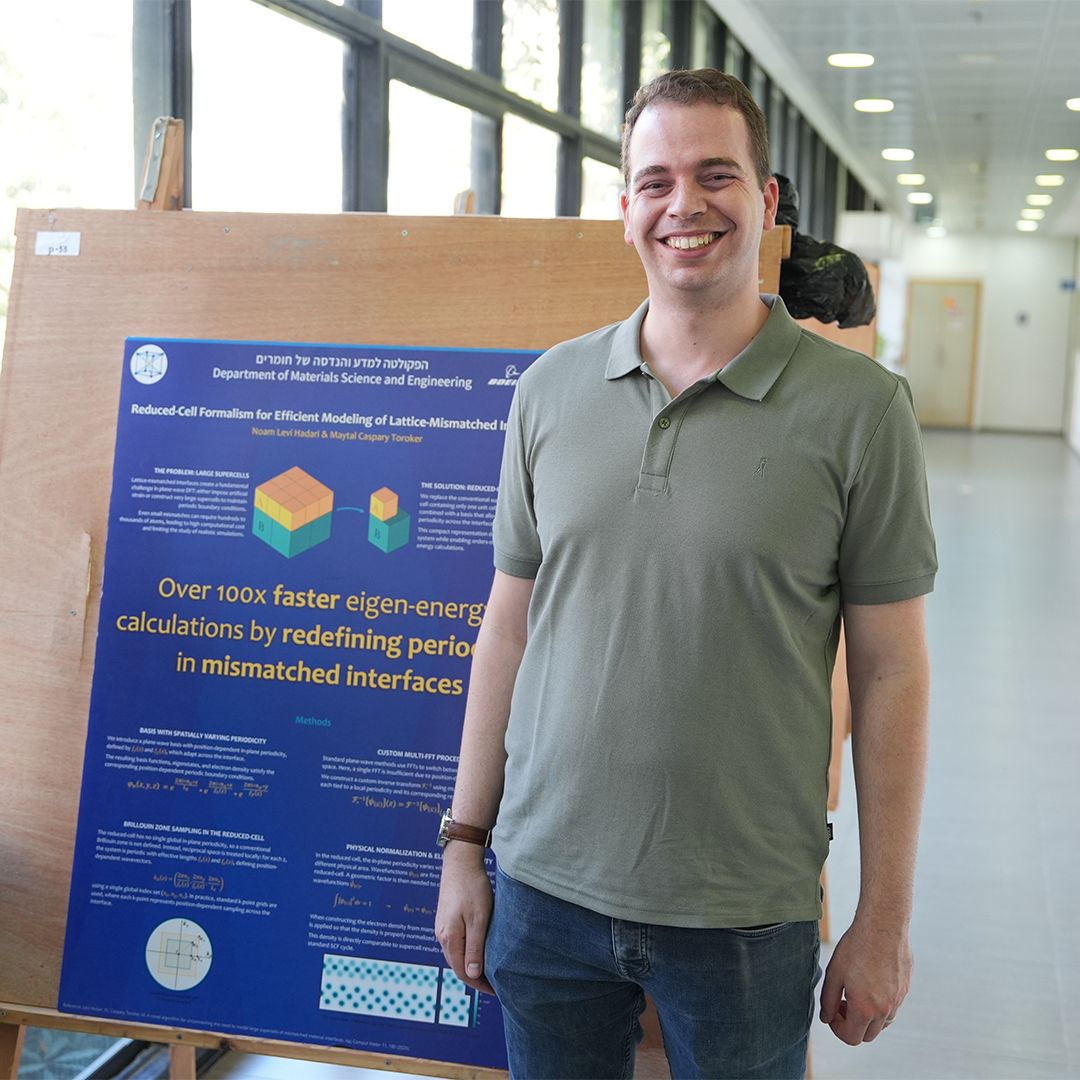
The title: Reduced-Cell Formalism for Efficient Modeling of Lattice-Mismatched Interfaces
Authors: Noam Levi Hadari, Maytal Caspary Toroker.
The research presents an efficient method for simulating lattice-mismatched interfaces without requiring very large supercells.
By allowing the basis periodicity to vary across the interface, each material can retain its natural lattice constant.
The method reproduces the main electronic properties of conventional supercell calculations while significantly reducing computational cost.
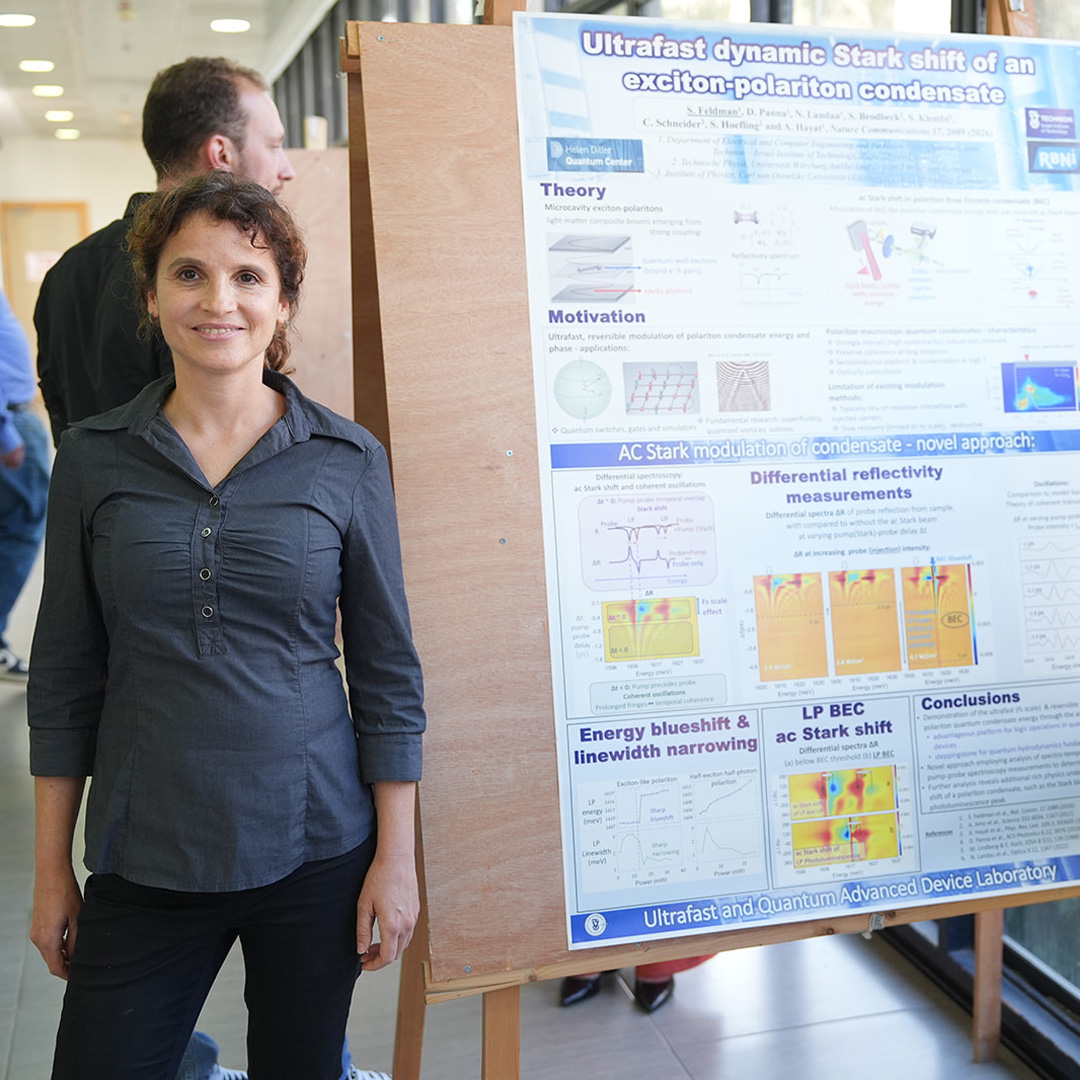
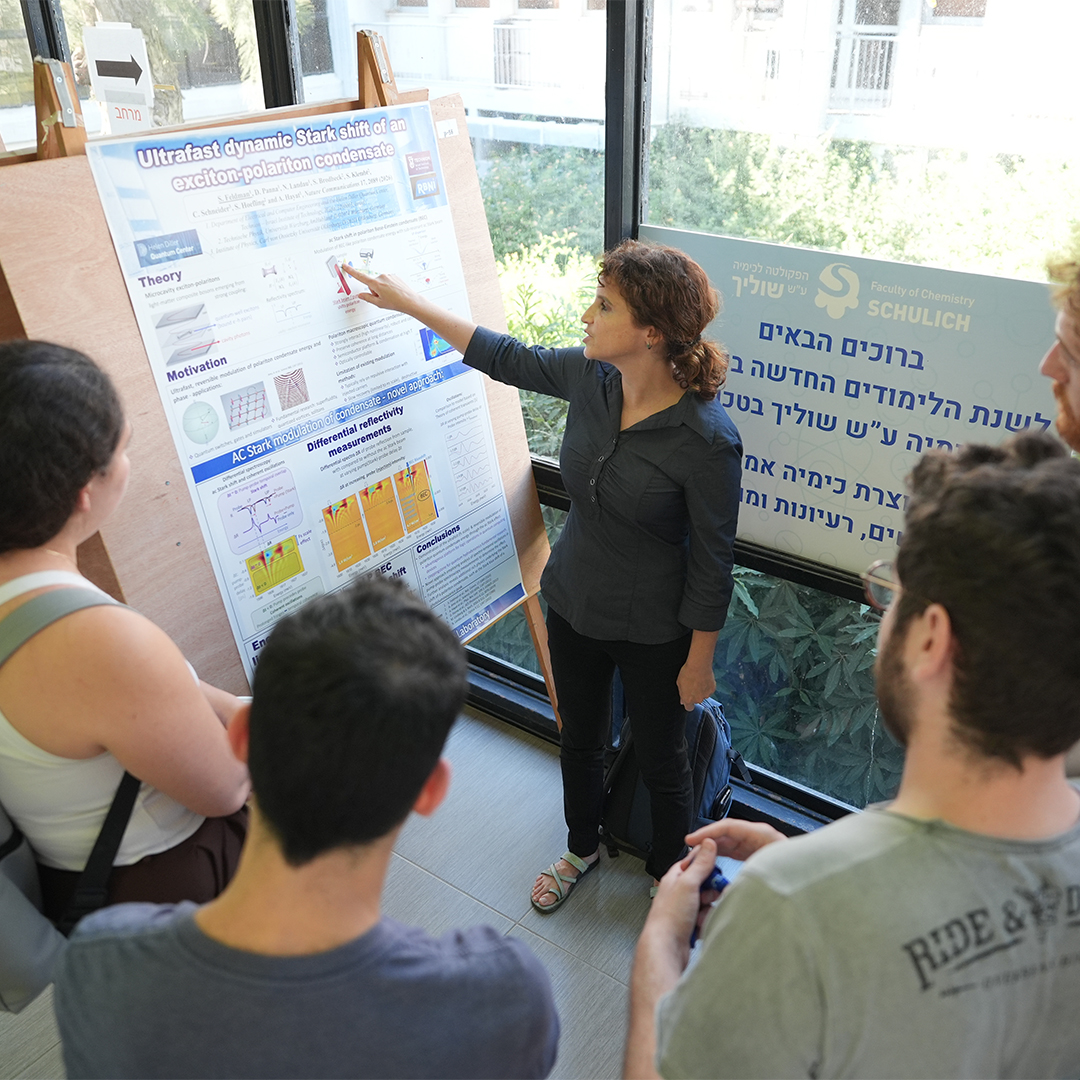
Sarit Feldman
PhD Student at the Faculty of Electrical & Computer Engineering at the Technion
The title: Dynamic Stark shift of a polariton-exciton quamtum condensate
Authors: Sarit Feldman, Dmitry Panna, Nadav Landau, Sebastian Brodbeck, Sebastian Klembt, Christian Schneider, Sven Höfling & Alex Hayat
The Research:
Bose–Einstein condensates (BECs) represent macroscopic quantum states characterized by the occupation of a single quantum mode and long-range coherence. Microcavity exciton-polaritons provide an appealing solid-state, on-chip platform for realizing BEC-like condensates complementing the extensively studied cold-atom systems. These quasiparticles, arising from the strong coupling between a cavity photon and a quantum-well exciton, exhibit unique behaviour resulting from their combined light-matter nature. The high nonlinearity stemming from interparticle interactions, combined with optical accessibility to the state of the polariton system, facilitates its dynamic control. A crucial property of exciton-polaritons lies in their ability to form condensates at elevated temperatures up to room temperature; while the temporal modulation of such condensates has led to the observation of collective phenomena of fundamental physical interest such as superfluid behaviour and solitons.
In this work, I investigate the dynamics of exciton-polariton condensates under two distinct excitation and control schemes. First, I demonstrate the reversible and ultrafast modulation of the polariton condensate energy via the ac Stark effect, achieved on femtosecond timescales. The system dynamics are observed in a pump-probe spectroscopy setup. To assess the ac Stark effect on a condensate I employ a novel approach based on the theory of coherent transients. Until now, modulations of exciton-polariton condensates were achieved at slow rates and via carrier-injection based destructive schemes. This work brings the modulation to time scales compatible with modern logic devices and well within coherence times limitations, thus presenting a steppingstone to implementing polariton-based switches and gates in both classical and quantum applications. Furthermore, Stark-based control techniques, employed in important cold-atom studies of quantum fluids, are here extended to a solid-state, nonequilibrium condensate platform, opening new avenues for exploring quantum hydrodynamics.