Institute of Advanced Studies in
THEORETICAL CHEMISTRY
Quantum Chemistry: From Birth to Nowadays
The founders of quantum chemistry were primarily physicists and applied mathematicians drawn to the subject by the richness and complexity of many electrons atomic and molecular systems. Per-Olov L"owdin, a Swedish theoretical physicist at the University of Uppsala and concurrently at the University of Florida, founded the Quantum Chemistry Department in Uppsala in 1955. Joseph Oakland (Joe) Hirschfelder, an American physicist who participated in the Manhattan Project and was a professor at the University of Wisconsin, founded the University of Wisconsin Theoretical Chemistry Institute (TCI) in 1959.
The members of TCI included applied mathematicians, physicists, engineers, and chemists. Charles Coulson, a Professor of Mathematics and the director of the Mathematical Institute at the University of Oxford, was appointed to the newly created chair of theoretical chemistry in 1972. The development of increasingly powerful computers in the 1960s influenced the development of theoretical algorithms that enabled the numerical solution of many-electron problems that could not be solved before. It is no wonder that many of the directors and heads of the first supercomputer centres were theoretical chemists. We can say that quantum chemists of those times conducted multidisciplinary research that combined applied mathematics, physics, and chemistry. The outputs of these multidisciplinary efforts were the development of Quantum Chemistry Packages that eventually became accessible to all, without the need to be a theoretician to run them.
Today, these packages are widely used by organic, inorganic, and physical chemists, as well as material scientists. The Institute of Advanced Studies at the Technion aims to maintain this interdisciplinary research tradition within the Chemistry Department at the Technion. This is in the spirit of Ruben Pauncz, the founder of Quantum Chemistry in Israel, who came to Israel as a refugee from Hungary in 1956 and was among the first in Western universities to teach undergraduate students quantum mechanics from a chemistry perspective, emphasizing mathematical theorems and computational algorithms. When the Department of Computer Science was established at the Technion, Ruben Pauncz delivered a course on using methods and algorithms for solving many-body problems. Nowadays, the members of IASTC are also members of the Quantum Helen Diller Centre at the Technion, where other members are from the Physics, Computer Science and Engineering Departments.
The members of TCI included applied mathematicians, physicists, engineers, and chemists. Charles Coulson, a Professor of Mathematics and the director of the Mathematical Institute at the University of Oxford, was appointed to the newly created chair of theoretical chemistry in 1972. The development of increasingly powerful computers in the 1960s influenced the development of theoretical algorithms that enabled the numerical solution of many-electron problems that could not be solved before. It is no wonder that many of the directors and heads of the first supercomputer centres were theoretical chemists. We can say that quantum chemists of those times conducted multidisciplinary research that combined applied mathematics, physics, and chemistry. The outputs of these multidisciplinary efforts were the development of Quantum Chemistry Packages that eventually became accessible to all, without the need to be a theoretician to run them.
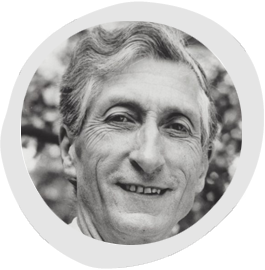
Prof. Charles Coulson
(1910-1974)
A Professor of Mathematics and director of the Mathematical Institute at the University of Oxford, was appointed as chair of theoretical chemistry in 1972
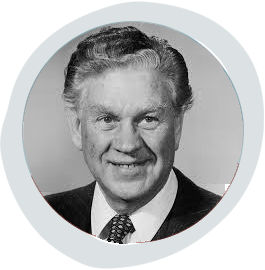
Prof. Per-Olov L"owdin
(1916-2000)
Founder of the Quantum Chemistry Department in Uppsala in 1955
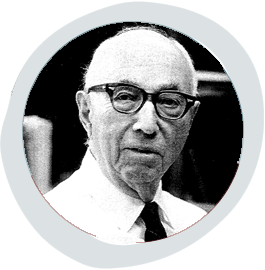
Prof. Joseph Oakland (Joe) Hirschfelder
Founder of the University of Wisconsin Theoretical Chemistry Institute (TCI) in 1959
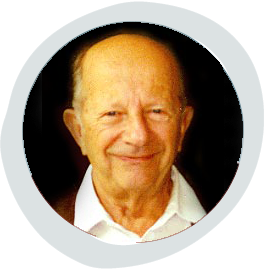
Prof. Ruben Pauncz
(2021– 1920)
The "Father" of Quantum Chemistry in Israel
The Keynote teacher in international summer schools (at Uppsala, Sweden) and Sanibel winter schools (at Florida, USA) on Quantum Mechanics for chemists